Feng Shui for Creative Flow
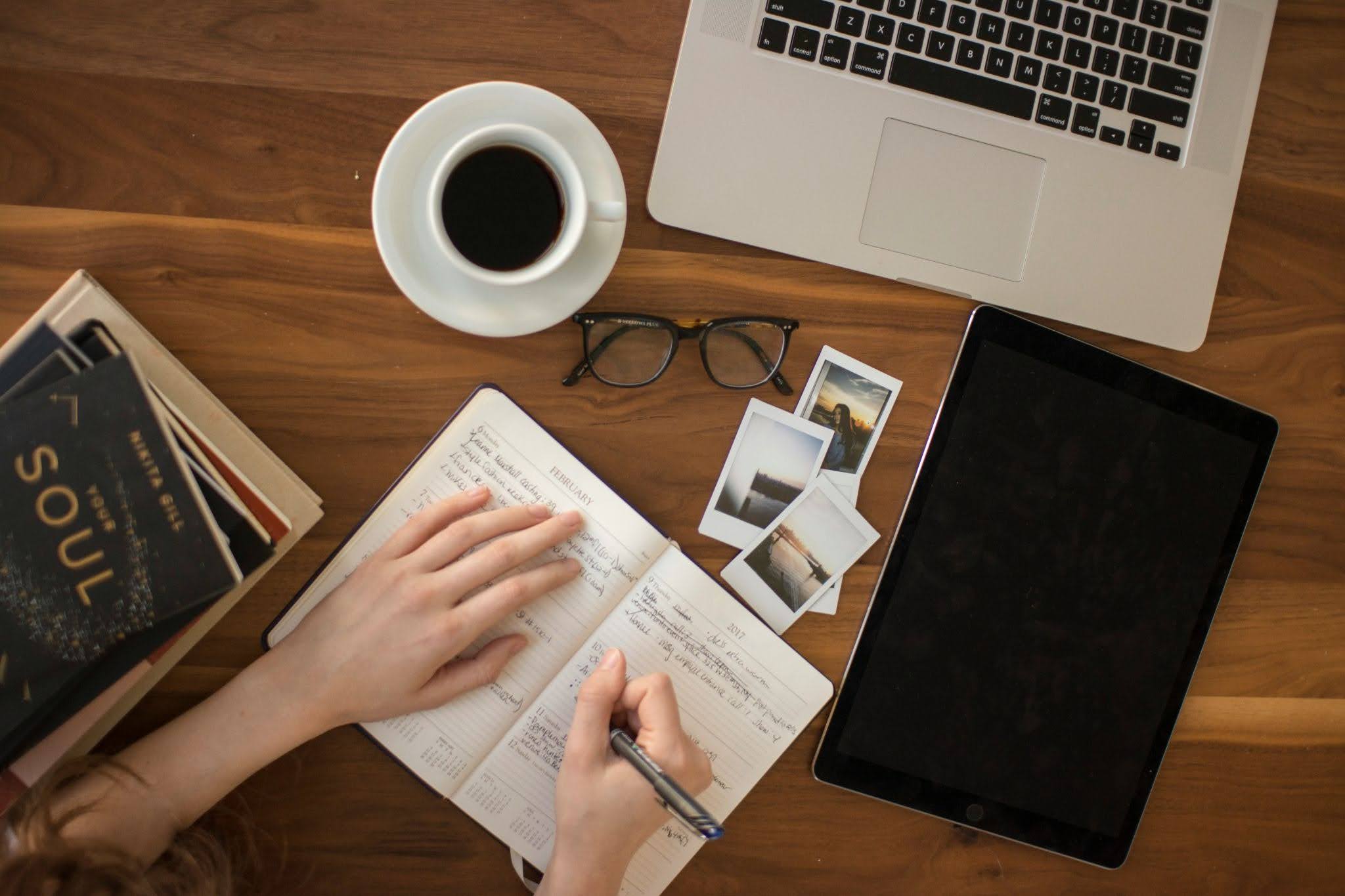
Photo by Thought Catalog on Unsplash
If you have any kind of creative background, you’ll know that creativity isn’t something you can just switch on, but rather something you cultivate over time. There are also many ways to cultivate creativity, including through your environment! If you’ve been feeling stuck or uninspired, it might be time to look at your surroundings to see if they’re optimized for creativity. Feng shui offers us ways to shape our spaces to allow ideas to flow more freely and come to life with greater ease.
Below, we’ve shared some of our feng shui tips to encourage creative flow. We also want to note that these tips can support you whether you consider yourself an artist or not. Regardless of your artistic abilities or training, everyone can be creative, and creativity can take many different forms.
Set up your creative workspace
Think about the physical space where you do your creative work. What you see when you sit down matters. If you're facing a blank wall, this can subconsciously create a sense of blockage. On the other hand, if you're facing artwork, a mirror, or meaningful visuals, this can give you perspective and invite inspiration. We often see desks positioned right up against a wall, and we generally recommend adding a mirror or artwork that creates a more expansive feeling. This allows your ideas to flow more easily.
Another thing we see all the time is a desk up against a window. Having a view of the outdoors can be great for creative thinking, because letting your gaze drift can almost put you in a daydreaming state that can be conducive to new ideas and creativity. However, this isn’t the best position for focused work because windows can be distracting. When you need to concentrate, make sure that you're in the commanding position, which means you're sitting at the desk and you can see the entryway into your office space.
When it comes to desk size, a small desk can limit you when you’re trying to brainstorm and think expansively, so you may want to move to a large surface like your dining table and really let yourself take up space when you’re in this stage. It’s also helpful to look at the shape of your desk. Round tables support movement, collaboration, brainstorming, and creative exploration, but are not the best for focus. You may want to set up a space for both purposes: you could have a desk where you're doing focused, deliberate work where you need to concentrate, as well as a round table for creative exploration.
It’s also important to make sure that when you pull your desk chair out, you can do so easily so that you're not backing yourself up against a wall. If you can't pull your chair out comfortably, it will mean you don't have a backup plan, and you're not able to pivot in your business or in your creative thinking very easily.
Balance yin and yang
Embracing creativity often means embracing a certain level of mess. From a feng shui perspective, we want to create a space for some creative chaos to happen. Creativity thrives when intuitive, fluid energy can flow, and that’s a very yin, unstructured state. A creative workspace that’s too tidy can feel restrictive and rigid, and even a little bit of mess or chaos can help ideas connect, evolve and take shape more organically.
It’s also important to recognize when order and structure, more yang qualities, are necessary. When you need to do analytical work or detail-heavy tasks, a clean and calm space supports this kind of clarity and focus. Creativity needs a bit of both yin and yang, so we want to embrace the balance of these two energies. As a creative person, your desk may shift from tidy to messy often, and that’s natural.
Find inspiration in the world around you
Creative flow doesn't only come when you’re sitting at your desk. It also comes from how you engage in the world. When you go out for a walk or visit a new place, pay attention and notice what catches your eye. Especially when you’re in nature, what symbols are you noticing? Are there animals or patterns that keep appearing in your life? Sometimes inspiration shows up in very subtle ways, asking you to notice. Even if you're not immersed in nature, moments of connection are everywhere, like a bird crossing your path, a flower that stands out, or an image you can't stop thinking about. When you notice these symbols around you, it’s an opportunity to pause and reflect, and consider what message it might hold. After you’ve investigated the symbol’s meaning with your own curiosity, you can also research online or in a book.
Creativity and the bagua
You might have seen one of the feng shui bagua areas, Dui, labeled as “Creativity”. This area is also called Children or Completion, and we call it Reflection. There’s a notion that Dui is about pure creativity, but Dui is really more about production and completion, or the result of your creative process. We see creativity as a flow that can lead in so many directions, rather than just the completion of something, and we actually believe creativity is contained in all areas of the bagua. The specific aspect of creativity you want to work on can influence what bagua area you may want to activate or pay attention to. To learn more about the feng shui bagua, check out our free downloadable bagua kit.
Here’s how each of the bagua areas relates to creativity:
Kan: Kan is wisdom. It’s associated with artistic intuition, deep seeking and knowing. Kan has to do with tapping into a part of you that is really deep creatively.
Gen: We call this area Insight. It’s typically labeled Knowledge, and it’s also connected to skillfulness. This is a really essential aspect of creativity because practicing and developing the technique of your craft gives you the opportunity to jump off and create something that’s based on skillfulness.
Zhen: Zhen, often referred to as the Growth or Family area, is about new beginnings. It’s the initial spark of creativity and the beginning of a creative process.
Xun: The Abundance or Wealth area of the bagua, called Xun, can be connected to creativity because creativity comes from a state of abundance. It’s often something that is an overflow, and the creative process involves making something and giving it to the world. That generosity is connected to abundance.
Li: Li is often referred to as Fame or Reputation, and we refer to it as Inspiration. Li is connected to the fire element. This area is about revealing things and bringing them into the light. In the creative process, this area can be connected to a revelation, and having the artistic inspiration that leads to clarity.
Kun: Kun is also called Nurture or Relationships, and it’s connected to the mother element. This is that very primal sort of creativity that has to do with giving birth or mothering someone or something, and creating something new in the world.
Dui: Dui is the area that some people call Creativity, though we refer to it as Reflection. We see Dui as the byproduct of creativity. It’s the output: the piece of art that you have finally created and finished, when the creative process is done. This is also when you reflect on what you’ve created and enjoy it.
Qian: Qian position is called Helpful People or Benefactors. Often, creativity stems from longing to help others or create something helpful to share with the world. A lot of art is created with the intention to offer the world a new perspective on something.
Tai Qi: The Tai Qi, or the center of the bagua, is typically where we look to for all the things that don’t fit anywhere else. If there’s another aspect of creativity you’re thinking of that doesn't fit into one of the categories we’ve mentioned above, you could focus on the center. The Tai Qi also touches and unifies all of the areas around it.
If there’s a certain aspect of creativity that you would like to work with, you may want to take a look at that bagua area in your home or creative space and see what messages it has for you. You could also intentionally work with this area of the bagua to support the corresponding part of your creative process.
We hope that these tips help you find more creative flow in your life! To dive deeper into feng shui, be sure to check out our book Mindful Living and our feng shui certification program.