Nine feng shui gardening tips to invite joy, flow, and abundance
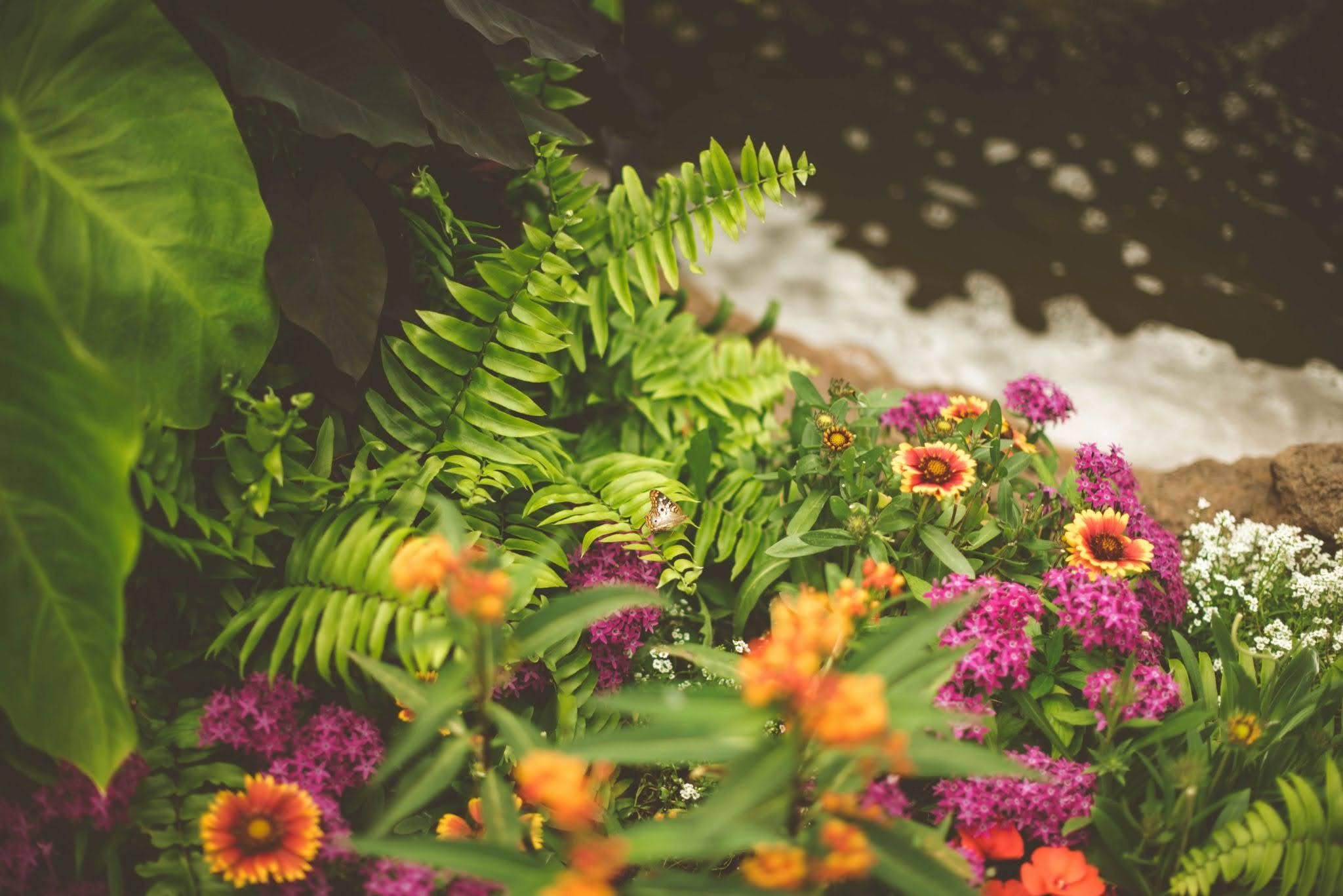
Photo by Samantha Gades on Unsplash
When most people think about feng shui, they think about interiors, but outdoor spaces are also really important. Whether you have a garden, a patio, a balcony, or just a few planters by your front door, your outdoor space can become an extension of your home.
We’ll share more about how gardens can support you generally, as well as how to create ease and incorporate yin and yang and the five elements. Most importantly, we want you to take away that these principles work on any scale. Whether you have a full backyard, a small balcony, or just a few pots by your door, you can still be mindful and create alignment and harmony. Your space also doesn’t have to be perfect – it’s about intention and applying feng shui principles to the space that you have.
Here are nine tips to invite joy, flow, and abundance in your outdoor space:
-
Clear and welcome the flow of qi
When we talk about interior spaces and feng shui, we often emphasize the front door because this is how qi (life force energy) enters your space. Similarly, it’s important to consider the threshold or entry point to your garden. You want to make sure that this area is not blocked and that it doesn’t feel awkward. If this area is clear and inviting, this will set the tone for qi to nourish the whole space. You can also think of the back-and-forth between your outdoor space and your indoor space, and how they nourish each other.
Find the entry point to your outdoor space, like the door that goes out to your balcony or the side gate that leads to your garden. If there is a door or gate, is it broken or squeaky? Does it open properly? In addition to fixing anything that’s broken, it’s helpful to clean up this area and consider if there is anything you could do to make the entrance feel more welcoming, such as new lighting.
-
Let the qi meander
In feng shui, we ideally want qi to flow slowly with intention, like a curving river. It’s best to avoid straight lines because this will cause the qi to move through the space more quickly. We also recommend avoiding sharp corners as these can feel harsh. Instead, look for curved lines to create more ease. Gentle, flowing pathways allow the qi to gather and circulate more slowly, which creates a more calming, abundant environment, as opposed to a space where the qi rushes away quickly.
If you have a larger outdoor space, you could incorporate this idea by creating a winding path through your garden. In a small space, you could simply arrange planters in a soft arc to guide the eye and the qi more gently, instead of placing objects in a straight line.
-
Balance yin and yang energies
A harmonious garden blends structure (yang) with softness (yin). In any garden or outdoor space, you want to have solid, strong points to ground the space, like furniture with defined edges or stone hardscaping, which provide yang energy. By contrast, the plant material that you have in your space provides that softer, yin quality. Nothing is 100% yin or 100% yang, but you can pair things mindfully to create a balanced space that feels both supportive and vibrant. Too much of one will feel uncomfortable: for example, a space that is all patio stones and rocks, without the softness of greenery or a water feature, would not feel balanced because it would be very yang. If you have a solid table in your space, you can balance this with more yin energy by adding some soft plants, like grasses or containers with potted plants flowing over the side.
-
Create a gathering space that nurtures connection
Depending on your climate, a garden or balcony can be an opportunity to create shared spaces that activate relationship qi. Dining areas represent your community and your relationships with family and friends, and outdoor seating can create a space that’s an extension of your home. An outdoor dining area encourages connection and conversation, as well as a sense of belonging with nature. It also makes your home feel more expansive, and acts as an in-between space that connects your private space and the outside world.
If you’re looking for more community or more connection with your family, you can take advantage of your outdoor space and set up a seating area there. Think about how many people you’d like to make space for: how many people are in your household, and how many friends do you want to bring into your life? If it works for your space, you definitely want to have enough chairs for everyone in your household, and if you want to encourage more connection or more friendships, you could bring in a few extra chairs. If possible, a round or oval table can bring in a smoother, more easeful flow of qi. Soft chairs also bring in more yin energy that encourages connection.
-
Anchor your space with a meaningful focal point
A focal point helps to draw the eye, stabilize the qi, and set an emotional tone for your garden. Without a focal point, the qi can feel scattered. A focal point also makes the space feel more intentional and complete. If you have the luxury of being able to add a fire pit, this is a great example of a focal point that encourages people to gather, and it also brings in warmth and connection. A beautiful tree or a water feature could also be a focal point. For more compact spaces, you could add a single statement planter or a beautiful outdoor rug that can really change the entire tone of the space and pull everything together.
-
Work with the five elements
You can balance your space by incorporating the five elements (wood, fire, earth, metal, and water) in simple and intentional ways. You could do this by bringing in materials (some of which will exist there naturally): a living green plant for wood, the sun for fire, soil for earth, an object made of metal, and the water you use to water your plants. Another option would be to use colors: wood is blue or green, fire is red, earth is yellow, metal is white, and water is black. These colors could be present in things like flowers and foliage, your outdoor furniture, or planters. The five elements represent different types of energies, and the idea is that when they are balanced, your space feels more harmonious and can support the different aspects of your life that these different elements represent. When you have each of the elements represented, this creates a harmonious wholeness. They don’t need to be represented in exactly equal quantities, but the idea is to intentionally bring in each element.
-
Design with real life in mind
A thriving garden depends on choosing plants that match the environment. If you have a shady yard, for example, be sure to choose plants that will thrive in shade. Healthy plants equal vibrant qi, and these will give you the benefits of wood qi, like vitality and growth. Struggling or dying plants drain and deplete energy, which is not something you want in your garden. If you’re not sure what kinds of plants to get, you can go to your local garden center and ask for recommendations. Often, plants are even grouped by their light needs. If you don’t have a green thumb, don’t worry – outdoor gardening can be quite forgiving if you’re willing to play around and get your hands dirty!
-
Active areas of your life with intention
In feng shui, we work with a tool called the bagua that has areas representing different aspects of life, like abundance, relationships, or personal growth. By intentionally activating these specific areas of the bagua that align with your goals, you allow the space (whether it’s a garden or an indoor space) to energetically support your life path. If you’re not familiar with the bagua, you can download our free bagua kit or listen to one of our episodes about the bagua like this one.
Once you’ve chosen an area to focus on, you can add the corresponding color to that area of the bagua in your garden. For example, if you want to focus on abundance, you would find the abundance corner of your garden and add something purple, which is the color associated with this area. This could be a plant with purple flowers or a purple garden feature.
-
Balance strong features like water and fire
While your outdoor space doesn’t need to include perfectly equal ratios of each of the five elements, it can also be helpful to look for potential imbalances when you have a strong feature. For example, a pool is a large body of water, and a fire pit is a lot of fire energy, and these could be overpowering without the right elements to balance them. Each element has its own characteristics, and if your space is really heavily weighted to one element, those qualities can be overwhelming. This can get a little tricky to determine, but if you’re concerned that something feels unbalanced, we recommend you work with a feng shui consultant like one of our graduates.
Overall, however, if you have a large pool in your backyard, you are going to most likely need to add something to balance the strong water energy. You can do this by adding earth and wood elements around it, like stone hardscaping and trees or bushes. If you have a big fire pit, you’ll also want to make sure it’s surrounded by the earth element to create a more harmonious space.
-
Bonus tip: let go of perfection
Lastly, as you’re thinking about changes to make to your garden, remember that feng shui is about awareness, not perfection. Even small, intentional changes can really shift how your space feels and also how you feel.