Redesigning Your Home When You're Redesigning Yourself
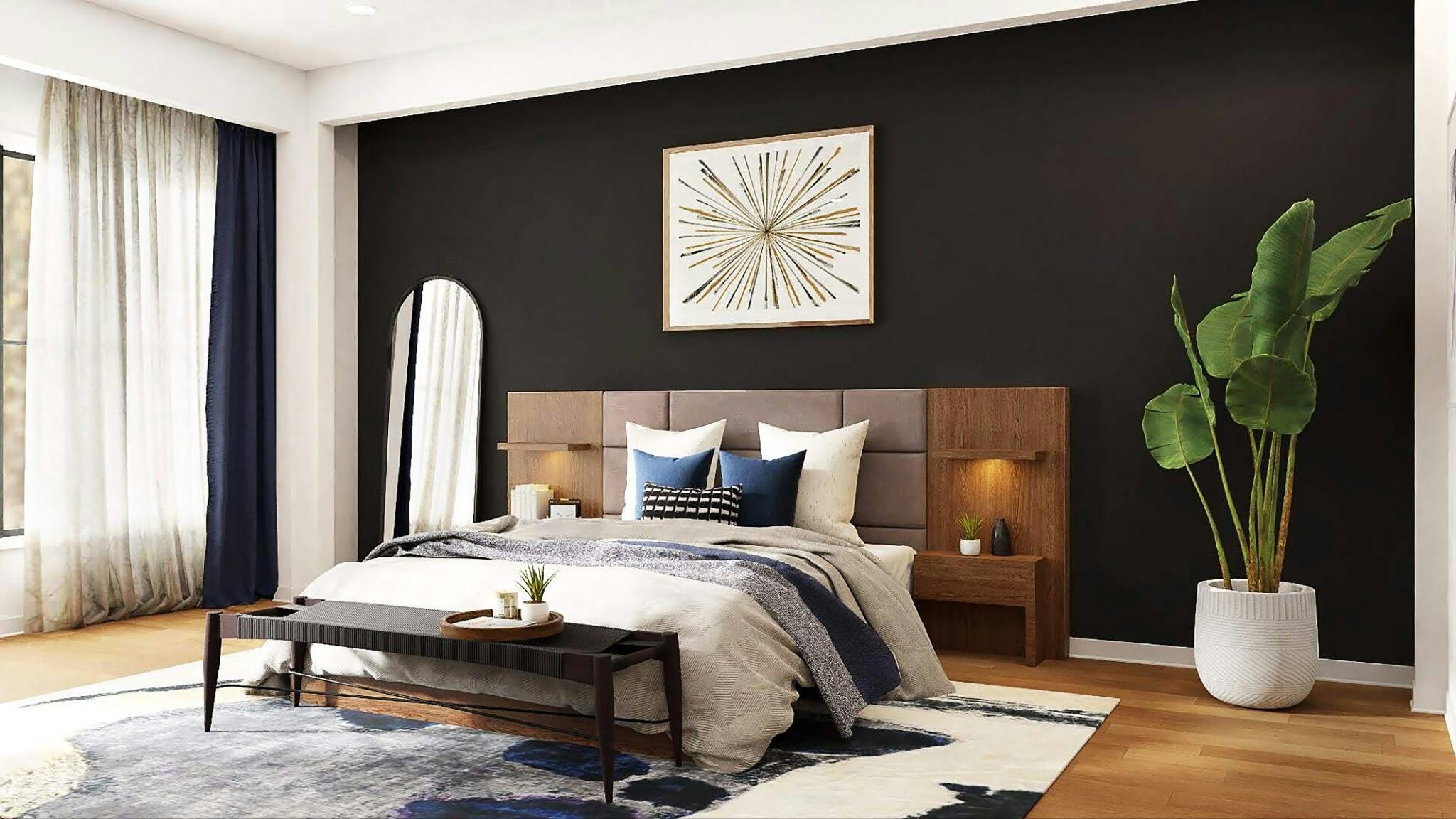
Photo by Spacejoy on Unsplash
Over the years, we’ve found that many people come to feng shui when they are going through personal changes. Many students in our feng shui certification program in particular join us because they’re working on themselves and they want to learn tools they can apply to themselves and their own homes and lives.
Often, a home redesign comes along with big life changes or events, like a move, a new job, a new relationship, or the end of a relationship. As our lives change, our priorities and our needs change, and we may feel that our homes no longer reflect us or serve us in the way they once did. Feng shui offers a way to explore the relationship between this inner change and your outer environment.
We don’t have the secret to how to redesign your life, but we can offer some ways in which feng shui can absolutely support you through this journey. Below, we’ve shared a process to help you work on your own spaces during times of transition. While this may not be a linear step-by-step process, we invite you to flow through the following ideas as you investigate how your home can support your changing life.
Begin to notice what no longer fits
Before changing anything, we invite you to pay attention and notice. This isn't about doing anything. It’s about awareness. It's about noticing your relationship between you and your home. Some things you can consider: What feels different about your life right now? What parts of your home still reflect an earlier version of you? Which spaces still feel supportive? Which spaces feel stagnant? Are there things that you're holding on to because of habits, guilt, obligation, or an old identity? Then, open yourself up to how you want to feel in your home right now.
As always, we encourage you to pay attention to the tangible, visible aspects of your home as well as invisible, energetic things that may come up. It can be helpful to journal on these questions; writing things down is one example of bringing together heaven and earth, or the invisible and the visible. As you write in your journal, you’re taking your thoughts and making them tangible.
Create space for something new
Once you have given some thought to what has changed within you and how your home is or isn’t serving you, you can start to look more closely at your space. Whether you’re experiencing a change in a relationship, a new job or project, or a different way of living, these shifts often need physical space in your life. In feng shui, we believe that you can benefit from creating actual physical room for a new opportunity. This could be something as small and simple as cleaning out a drawer or a shelf in your home, or maybe you want to work on a spare room or garage. You might want to let go of objects that are associated with your previous chapter. That doesn’t mean you have to get rid of every single thing from that time in your life, but you’ll have to use your discernment to see if there are objects that are holding you back or that are not a reflection of who you want to become. Maybe you’ve held onto unfinished projects that you don’t actually need to finish. If you’re not sure where to start, we recommend looking at how difficult it is to get into your bed or bedroom, since this is a very important part of your home from a feng shui perspective.
The idea is to clear pathways and areas where qi feels blocked. Decluttering isn't about getting rid of everything; it's more about asking what you’re willing to make space for. As feng shui practitioners, we believe that qi needs space to move, circulate, and gather. When qi is moving properly and when it's able to circulate, it makes room for something new in your life.
Redesign your space using feng shui tools
Rather than focus on aesthetics, we’d like you to consider reconfiguring your home to reinforce the qualities you’re intending to cultivate. This doesn’t have to be a real redesign of your home; it can be very simple. A great way to look at your space and how it can support you is through the lens of the five elements. You can learn more about the five elements here.
Before adding anything to your space, consider what qualities you need more of to support who you’re becoming. Then, you can mindfully choose one of the five elements to bring into your home to embody those qualities. We’ve included a bit about each element, why you might want to bring it into your space, and a few ways to do so below:
-
Wood element
Wood is about growth, new beginnings, expansion, creativity, and vision. A few ways that you can embody this are with living green plants, vertical forms like tall trees or tall drapes, or the colors green, blue, or teal.
-
Fire element
Fire is expression, inspiration, confidence, visibility, passion, and warmth. You can bring in fire with lighting, and especially warm lights. You can also add fiery colors like red and red-orange.
-
Earth element
Earth is about stability, grounding, nourishment, support, and belonging. If you wish to cultivate those qualities in your life, you can bring in natural materials, low and stable furniture, or square shapes like a low square coffee table or a rectangular rug. You can also use yellow and earth tones.
-
Metal element
Metal embodies precision, simplicity, discernment, simplification, and productivity, and the colors associated with metal are white, gray, and metallics. You can also introduce metal energy through circular shapes or objects made of metal.
-
Water element
Water is flow, intuition, adaptability, wisdom, and connection. You can bring in water with very dark tones like black, charcoal, and dark gray, as well as reflective surfaces like mirrors or flowing, undulating forms.
Pick your focus using the feng shui bagua
The bagua is a tool used in feng shui to connect different areas of your home to certain aspects of your life. While it can be tempting to work on every area of your life at once, we always encourage a simpler, more manageable approach. At the heart of this change that you’re going through, what part of you is shifting? This can help you determine which gua, or area of the bagua, to focus on at this moment.
The bagua can be used on a much deeper level than you might think. If you want to work on relationships or wealth, for example, there are of course bagua areas associated with those topics, but there are many layers of meaning to each gua. If you want to explore the bagua more deeply, we go into more detail on this in our book, Mindful Living: A guide to the everyday magic of feng shui.
For the purposes of this post, we’ll go over each gua in a simple, straightforward way. We’ve included a question to reflect on for each gua, to help you decide where it would be most impactful for you to focus your attention:
Kan/Career: Does your workplace support where you’re going?
Kun/Relationships: Does your home make room for connection, both in relationships and in yourself?
Zhen/Family: Are there spaces in your home that support belonging?
Xun/Abundance: Are you treating your possessions and resources with intention?
Tai Qi/Health: Does your home make healthy routines easy?
Gen/Knowledge: Is there a space for learning and reflection?
Dui/Children: Is there room for play and experimentation?
Qian/Helpful People: Does your environment support connection and possibility?
After you’ve reflected on these questions and chosen the area that feels most important right now, you can add something new to the corresponding part of your home, or you can take a more yin approach and create some space there. If you want to learn more about the feng shui bagua mandala, be sure to check out our free downloadable bagua kit.
Take your time and start slowly
The word “redesign” sounds big and dramatic, but transformation doesn't have to happen all at once. In fact, making small changes can give you the opportunity to notice how you respond to these shifts in your home. Start with one room, one area of the bagua, or one surface. Move one piece of furniture, introduce one element, or remove one object that no longer feels aligned.
Essentially, try something small, take the time to observe and notice how it feels, and then you can adjust if you want. Feng shui encourages us to develop an ongoing relationship with our spaces, rather than treating a change in your home as a one-time makeover.
Reflect: How does your home reflect who you're becoming?
After making some shifts in your home, pause and ask: does your home feel more like you? If you added a mirror because you wanted to embrace the water element, or you removed something that reminded you of a previous version of yourself, notice how that feels. What feels lighter? What feels more supportive? What are you seeing differently? We would encourage you to journal on these questions.
This also doesn’t just have to be about your home; there’s an invitation to pay attention to both your inner and outer experiences. For example, are you seeing things differently outside of your home because of the shifts you've made in your space? Is there something in your heart that you’re holding onto? Is your home supporting the life you’re wanting to create? And what is one more thing you might be ready to change?
To close, we invite you to reflect on this question: When I walk into my home, does it remind me of who I was or does it support who I am becoming? And remember, redesigning your life and your space is a process, so take your time to go through the steps, pausing to reflect along the way.